Access route and set-down geometry
Before a container arrives, trace the full delivery path: - Minimum gate and aisle width for the truck and trailer - Turning radius around parked vehicles or stacked materials - Overhead clearance for tree limbs, utilities, and canopies
Tight turns at industrial sites often determine whether a container can be placed parallel to a building or must sit in a remote corner. A straight approach eases set-down and door orientation.
Surface and bearing capacity
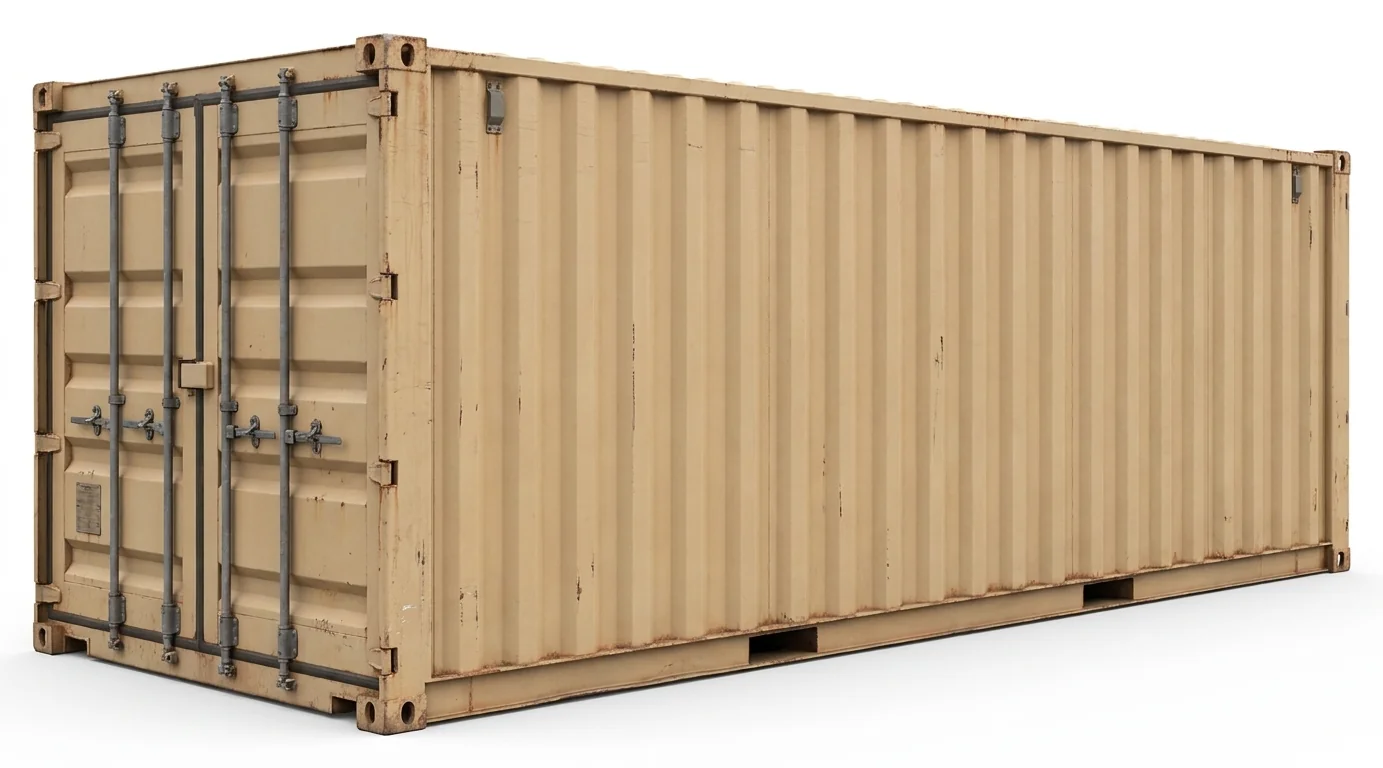
Containers concentrate load at corner castings. On Evansville’s soils, surfaces that appear level can pump or rut after wet weather. A firm, well-drained pad reduces settlement that can rack doors and complicate access. Confirm any slope that could affect door swing or pallet jack movement.
Door orientation and traffic
High-frequency access during hot, humid months benefits from shaded placement and clear aisles. Coordinate with material flow so doors face the work face, not active truck lanes. If you plan to store lifts, forks, or long stock, verify interior length and threshold height against your handling equipment.
Coordination with lift equipment
- For indoor pick-and-place work, see /forklift-rental/.
- For staging parts at height, review /telehandler-rental/ and /articulating-boom-lift-rental/ for outreach constraints.
Information that narrows the choice
- Delivery path width, grade, and overhead limits
- Surface type and bearing in wet conditions
- Door orientation relative to workflow
- Interior clearance for racking or oversized items
Exterior placement and elevated handling remain subject to site conditions, unit instructions, and workplace procedures.