Start with the job window and runtime
- Define the longest continuous run you expect between refueling or service intervals.
- Note if lighting is needed through pre-dawn mobilization or overnight shifts.
- List all power draws: tools, compressors, HVAC assist, and site trailers.
In Evansville’s heat and humidity, temporary cooling and ventilation often increase total load. That can move a borderline size choice up a class to maintain voltage stability.
Surface and setup on local soils
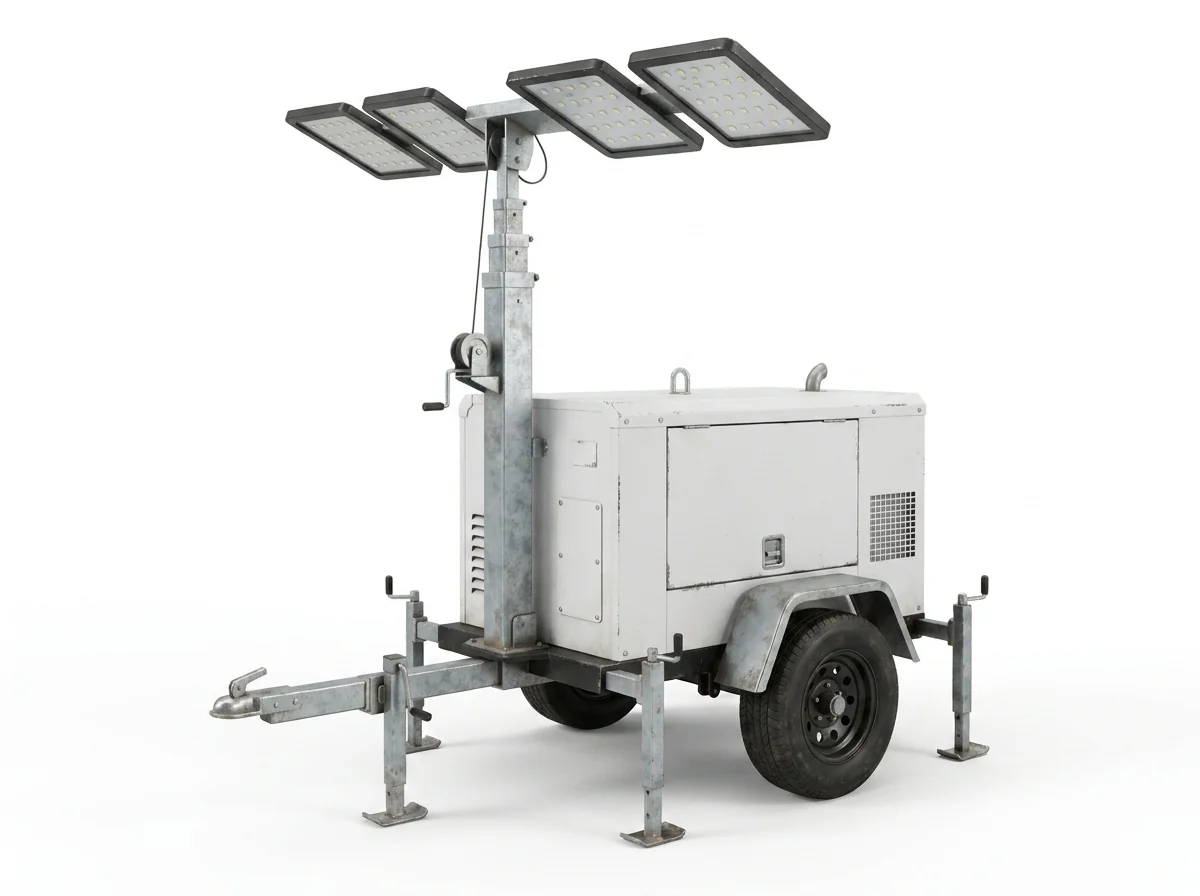
The region’s silty soils can soften after rain. A towable light tower or skid-mounted generator may need a firmer pad or a shorter cable run to reach stable ground. Plan placement so the mast can clear nearby utilities and the generator remains outside high-traffic paths.
- Confirm approach width and turning radius for trailers.
- Identify any curb drops, dock plates, or thresholds that affect delivery.
- Map cable routing to avoid water collection areas and trip zones.
Noise and air considerations
Production floors and healthcare-adjacent work often call for lower-noise options or indoor-rated power sources near sensitive areas. For outdoor tasks, orient exhaust away from occupied areas and confirm that prevailing winds won’t push fumes into open doors.
Light coverage and mast height
Flat terrain helps with even coverage, but obstacles like stacked materials or temporary fencing can create shadows. Estimate the lighted footprint against your work zone and confirm that mast height clears trailers, containers, or scaffolds without glare into nearby operations.
Pairing with access equipment
Aerial maintenance commonly runs alongside portable power and lighting. If the elevated task is indoors on smooth slab, see /electric-scissor-lift-rental/ or /vertical-mast-lift-rental/. For exterior tasks on softer ground or gravel, review /rough-terrain-scissor-lift-rental/ and /boom-lift-rental/ options.
Information that narrows the choice
- Max amperage and starting surge of connected equipment
- Required runtime between refuels
- Setup surface condition before and after rain
- Clearance for mast raising and cable routes
- Delivery path width, grade, and dock access
Actual site conditions, manufacturer instructions, and your procedures govern how equipment is placed and used, especially for exterior or extended-hour operation.